October 12, 2026
The Minerals in Cashews: Magnesium, Copper, Zinc and Iron
Small nut, long list
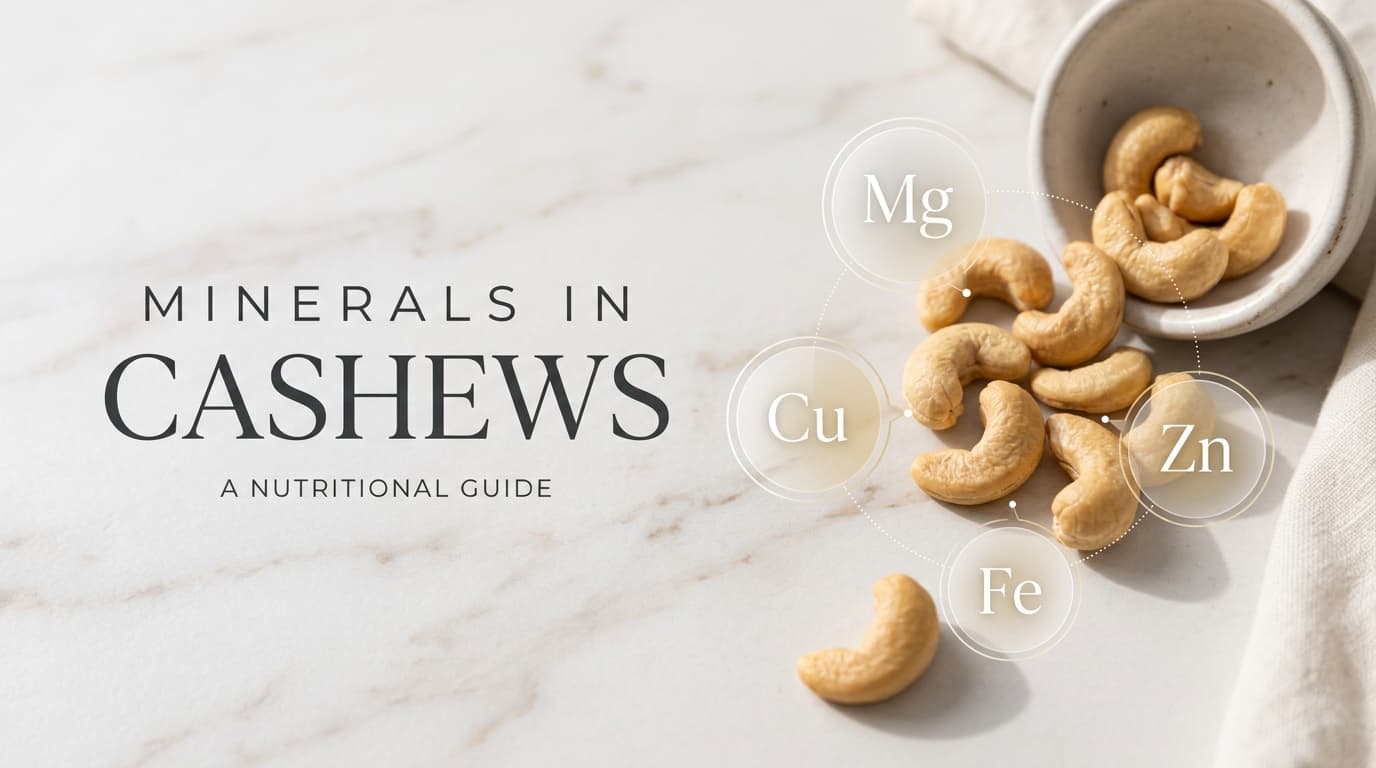
Cashews are known for their minerals. According to the Global Cashew Council, a 28 gram serving (about 18 cashews) contains roughly 74 mg of magnesium, 0.63 mg of copper, 1.6 mg of zinc, 1.7 mg of iron, 139 mg of phosphorus and 160 mg of potassium. They also contain a little vitamin K, vitamin E and several B vitamins.
Magnesium
Magnesium is involved in hundreds of processes in the body, including normal muscle and nerve function and the release of energy from food. Many diets don't supply quite enough of it, so nuts are a pleasant way to add some. A handful of cashews gives a useful share of a typical day's needs.
Copper
Cashews are an especially good source of copper compared with many other snack nuts. Copper helps the body use iron and supports normal connective tissue and the nervous system. It's a mineral people rarely think about, but it's easy to fall short on.
Zinc and iron
Zinc contributes to the normal function of the immune system and to healthy skin, and iron is needed to make haemoglobin, which carries oxygen in the blood. The Council notes that cashews have a fairly high iron content and that iron contributes to normal immune function. Plant sources of iron are absorbed less readily than iron from meat, so eating them with a source of vitamin C, like fruit, helps.
Phosphorus and potassium
Phosphorus works with calcium to build bones and teeth, and potassium helps regulate fluid balance and normal muscle function.
How to get the most from them
Eat cashews as part of a varied diet, since no single food covers everything. Plain or lightly seasoned cashews give you the minerals without a lot of added salt. For how a handful compares to other nuts, see cashews vs other nuts, and for portions see how many cashews to eat a day. You can find our plain roasted option in the shop.
How a handful adds up
Daily needs vary with age, sex and country, so treat these as rough comparisons. A 28 gram handful gives roughly a fifth of a typical adult's daily magnesium and about two-thirds of their copper, according to the figures the Global Cashew Council publishes. For zinc and iron, a handful gives a smaller share, which is why nuts are best seen as one part of a varied diet and not the only source.
Other foods that supply these minerals
Magnesium is also found in leafy green vegetables, pumpkin seeds and wholegrains. Iron and zinc come from lentils, beans, chickpeas, eggs, meat and fish, and copper from sesame seeds, mushrooms and shellfish. Mixing foods like these through the week is more reliable than relying on any one of them. Our Cooking Cashew pairs well with lentils and vegetable curries, which is an easy way to combine them.
Food first, supplements second
A varied diet is the usual way to get minerals, and cashews can be part of that. If you think you may be low in iron or another mineral, because of tiredness or a restricted diet, ask a doctor for advice and a blood test before you take supplements, since too much of some minerals can be harmful. See cashew nutrition facts for the wider picture.
A note
This is general information, based on figures published by the Global Cashew Council, and not medical advice.