October 10, 2026
10 Surprising Facts About Cashew Trees
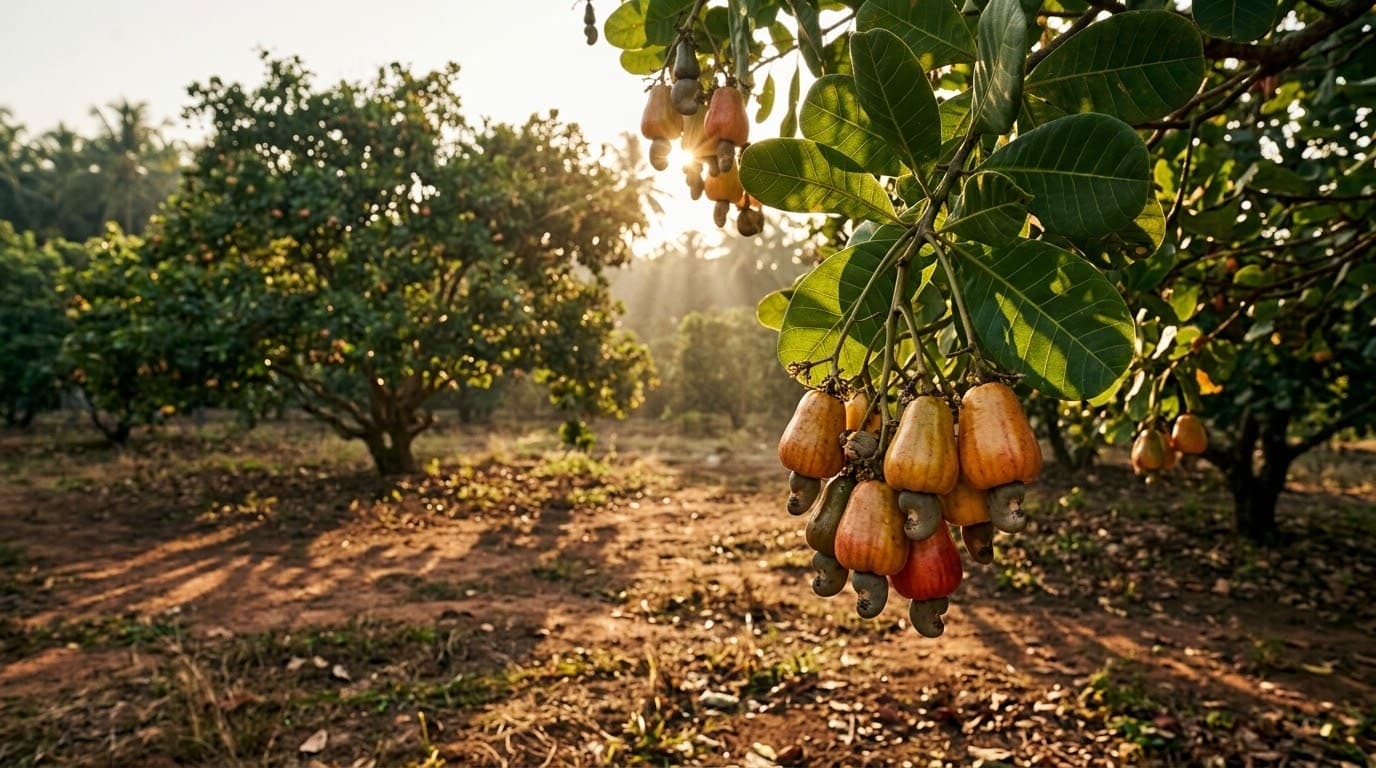
1. The nut grows outside the fruit
The cashew nut hangs below its fruit, in a curved grey-green shell, instead of inside it. Read all about the fruit in what is a cashew apple?
2. The 'apple' isn't really the fruit
The juicy cashew apple is a swollen flower stalk. The real fruit is the small shell at its tip, which holds the single kernel.
3. The tree is an evergreen
A cashew tree keeps its leaves all year. Most trees grow to about 8 to 12 metres tall, and some can reach as high as 20 metres.
4. It has two kinds of flowers
A cashew tree carries male flowers and hermaphrodite flowers, which have both male and female parts, at the same time. Insects carry pollen between them.
5. It's related to mangoes and pistachios
All three belong to the same plant family. See cashews are related to mangoes and pistachios.
6. It thrives in poor soil
Cashews cope with sandy, poor soil and dry weather, and they need little irrigation and little looking after. That's why they've been used to green degraded land and protect soil.
7. It comes from Brazil
The cashew isn't native to Asia. It began in north-eastern Brazil and spread with Portuguese sailors. Our post on how the cashew travelled the world tells the story.
8. The harvest is quick
From pollination, the nut and apple ripen in about two to three months, depending on the variety and the weather.
9. The shell has a harmful oil
Between the layers of the shell is a caustic oil that can blister skin, which is why cashews are never sold in the shell. The oil has industrial uses too, as we explain in what happens to the cashew shell?
10. Only one nut comes from each fruit
Each cashew apple carries a single nut, and every nut has to be picked, dried, shelled and peeled by hand or machine before it becomes the cashew you eat. That's a big part of why cashews cost more than many other nuts. See how a cashew is grown and processed, and try the result in our roasted cashews.
A few more things worth knowing
The cashew apple spoils quickly after it is picked, which is why it is usually eaten or turned into juice, jam or preserves close to where it grows, while the nut travels much further. A cashew tree also takes a few years to begin bearing fruit, so planting one is a long-term investment for a farmer.
Because each fruit carries only one nut, and the shell must be opened carefully and the kernel peeled, a lot of work stands behind every handful you eat.
What these facts mean for the cashew you buy
Knowing how the tree grows helps explain the price and the taste of your cashews. The long wait for a tree to mature, the single nut on each fruit, the oil in the shell and the careful drying and grading all add up. If you would like to follow the whole journey, read how a cashew is grown and processed and why cashews are dried and stored so carefully.
Keep exploring
For more on where the cashew grows, see where cashews are grown and what environment cashew trees grow in. For the part you can eat, see our cashew nutrition facts, or browse our roasted cashews.