October 9, 2026
Where Are Cashews Grown? The World's Top Producing Countries
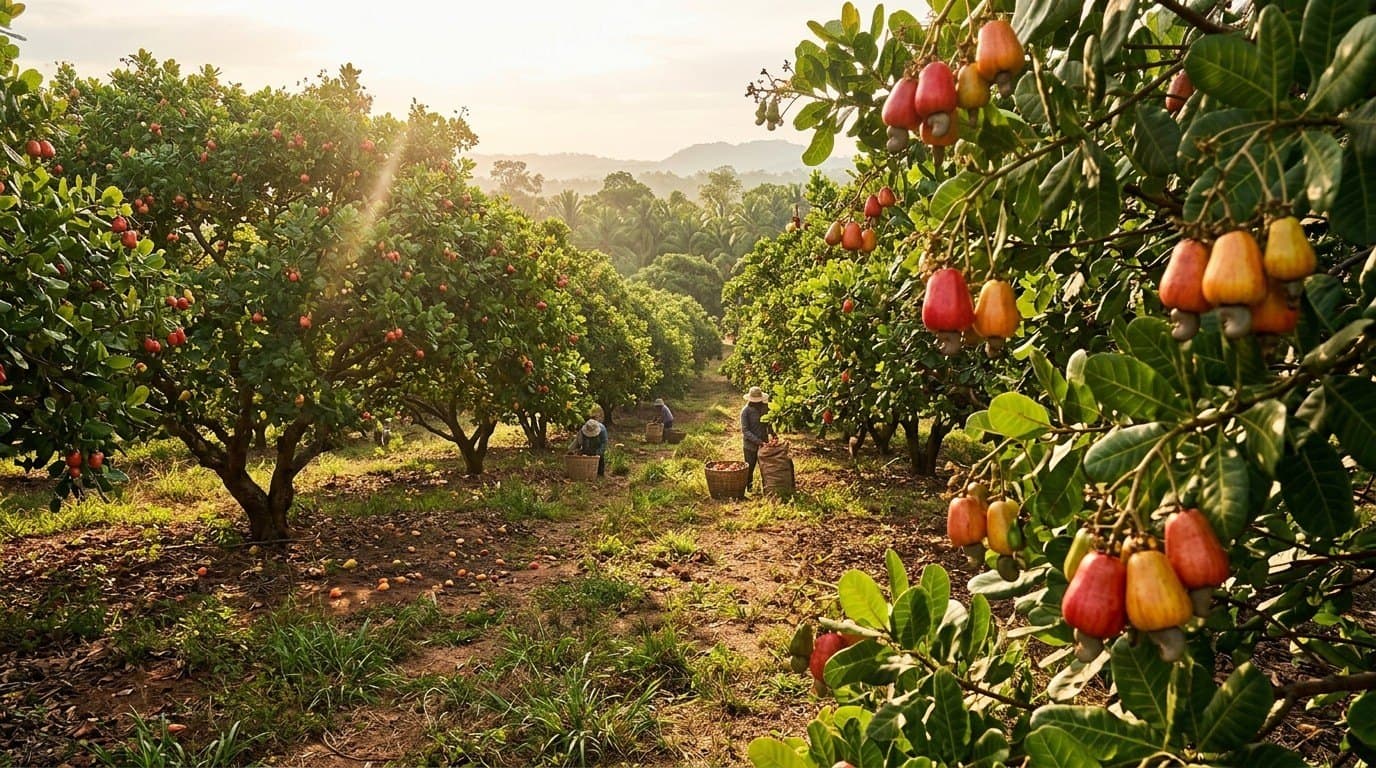
A tropical crop with a global reach
Cashew trees need warmth, and they're now grown across many tropical countries. The Global Cashew Council lists India, Vietnam, Côte d'Ivoire, Guinea-Bissau, Tanzania, Benin and Brazil among the main producing countries, with South Africa and Australia a growing presence.
The biggest producers
According to the Council, world output was roughly 720,000 to 790,000 metric tons a year (measured as kernels) over the 2015/16 to 2019/20 seasons. India led, at about 170,000 to 195,000 tons a year. Côte d'Ivoire followed at around 149,000 tons, then Vietnam at about 82,000 tons, and Tanzania at around 53,000 tons. These numbers shift from year to year with the weather and the market.
Why the map looks the way it does
Cashews like tropical climates, a distinct dry season and well-drained soil. They can grow where annual rainfall is anywhere from 400 to about 4,000 mm, and at elevations up to about 1,000 metres, which helps explain why they've spread so widely. Read more in what environment cashew trees grow in.
Growing and processing aren't always in the same place
Where cashews are grown and where they're processed can be different countries. Some nuts are harvested in one country, shipped as raw nuts, and shelled and peeled in another, where the labour and machinery are. That makes the trade fairly complicated, and it's one reason prices can move through the year. We explain more in kaju price in Sri Lanka.
Where Sri Lanka fits in
Sri Lanka is a much smaller producer than the giants above, but cashew has a long history here, particularly in the dry zone around Puttalam. A smaller crop is also why choosing a producer you trust matters. We buy from farms in Puttalam and roast to order in small batches. See how to buy cashews online in Sri Lanka for what to check.
Raw nuts versus kernels
Production figures are usually quoted as kernels, which are the part you eat. Raw nuts in the shell weigh much more, because the kernel is only about a quarter or less of the nut by weight. That is why two sets of numbers for the same crop can look very different, so check which one a source is using before you compare countries.
When each country harvests
Countries in the northern and southern hemispheres harvest in different months, which spreads supply across the year. Our post on harvest seasons around the world explains which regions harvest when, and how that affects the cashews you can buy at different times of the year.
Does origin change the taste?
Cashews from different regions can differ a little in size, colour and flavour, because of the variety of the tree, the soil, the weather and the way the nuts are dried and processed. It is hard to generalise, though, and how the cashews are roasted and how fresh they are usually matters more to the taste than where they grew. That is one reason we roast in small batches to order.
Taste the difference
You can try our Puttalam cashews in the shop, or compare pack sizes and prices in our price guide.