October 16, 2026
Cashew Nutrition Per 10g, 28g and 100g: Calories, Protein and Fat
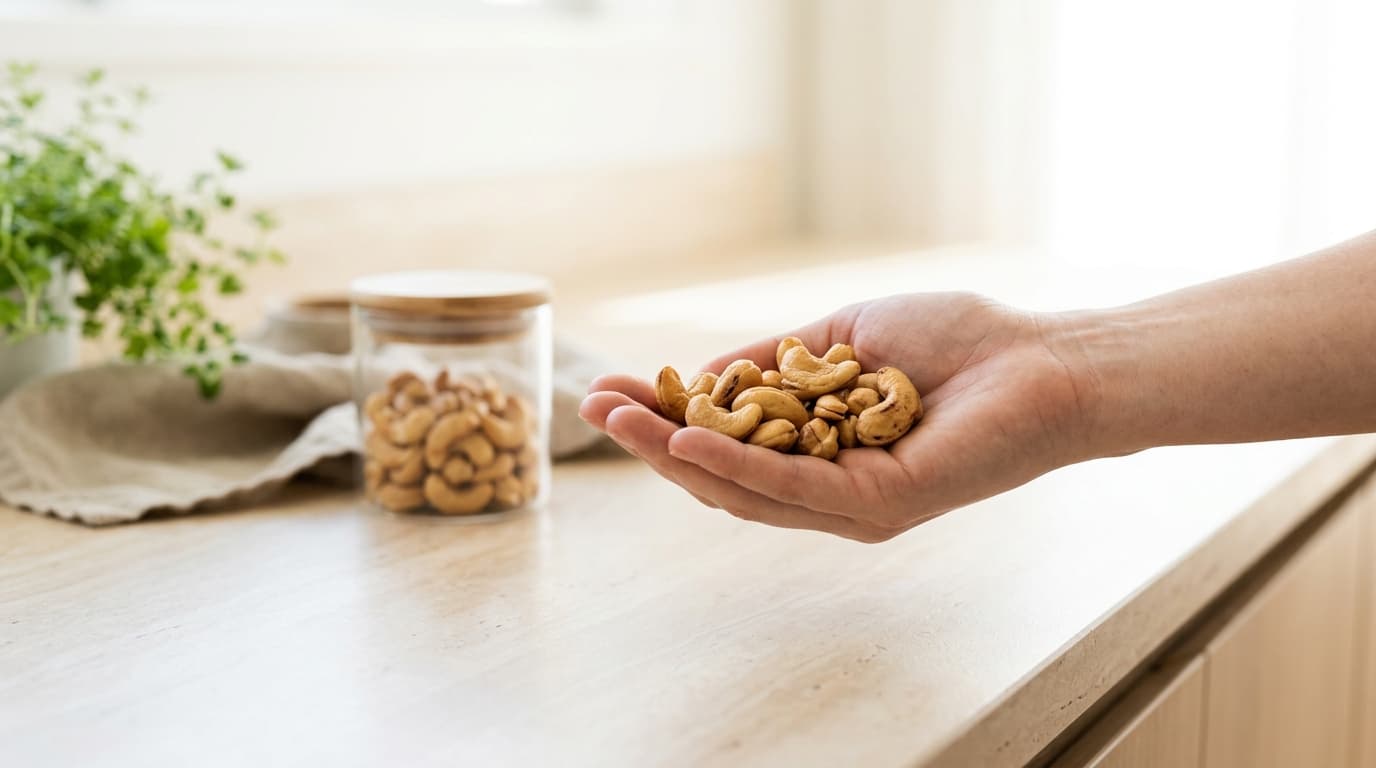
The numbers at a glance
These are approximate values for plain cashews. Per 100g, cashews contain about 553 calories, 18g of protein, 44g of fat, 30g of carbohydrate and 3.3g of fibre. Scaled down, 28g, which is a standard small handful, gives about 155 calories, 5g of protein, 12g of fat, 8.5g of carbohydrate and just under 1g of fibre. And 10g gives about 55 calories, 1.8g of protein, 4.4g of fat, 3g of carbohydrate and 0.3g of fibre.
The Global Cashew Council quotes a slightly different set of figures for 28g, about 160 calories, 4g of protein and 13g of fat, because values vary with the source and the batch. Treat all of these as a guide, as real packs differ by brand and by how the cashews were roasted.
How many cashews is 10g, 28g and 100g?
A 28g serving is about 18 cashews, which is the portion the Council recommends. That makes 10g about six or seven cashews, and 100g about 60 to 65. The count depends on the size of the nuts: a larger kernel such as a W180 gives only about 11 nuts in 28g, while a smaller W320 gives about 20, as we explain in how many cashews are in a kilo. A level cup of cashews weighs around 150g.
How much protein is in cashews?
A handful of 28g gives about 5g of protein, and 10g gives under 2g. Cashews are a useful plant source of protein, but not a concentrated one, so a handful will not replace a meal of dhal, eggs, fish or meat. They work best as part of a varied diet, and they add some staying power to a snack because protein and fat help you feel full.
How many calories are in one cashew?
One medium cashew has about 9 calories. A cup, around 150g, comes to over 800 calories, which is why a bowl of cashews eaten in front of the TV can add up fast. Cashews are calorie-dense because of their fat, so portion size matters more than the nut itself. Our guide to how many cashews to eat a day and our post on cashews and weight cover how to keep to a sensible amount.
Fat, carbohydrate and fibre
Most of the fat in cashews is unsaturated. Of the roughly 13g of fat in 28g, around 8g is monounsaturated and 2g is polyunsaturated, according to the Council. The carbohydrate is modest, and only about 1.4g of the 28g serving is sugar. Fibre is lower than in almonds or pistachios, so cashews are not the best choice if fibre is your main goal. See cashews vs almonds vs walnuts for the side-by-side numbers.
Minerals in a handful
A 28g serving contains roughly 74mg of magnesium, 0.63mg of copper, 1.6mg of zinc, 1.7mg of iron, 139mg of phosphorus and 160mg of potassium, according to the Council. Cashews stand out for magnesium and copper. We go through what each mineral does in the minerals in cashews.
Do roasting and salt change the numbers?
Roasting changes the flavour and texture much more than the nutrition: the fat, protein and mineral content stay roughly the same. What changes the picture is what is added. Cashews roasted in oil carry a few more calories than dry or oven-roasted ones, and salted, sugar-coated or heavily seasoned cashews add sodium or sugar. Our Oven Roasted Cashew is roasted with no added oil. For the details, see raw vs roasted cashews.
Using the numbers
If you are tracking calories, weigh a portion on a kitchen scale once, so you know what 10g and 28g look like in your hand, and then use your hand as a guide. These numbers are general information and not medical advice, and if you follow a special diet or have a health condition, ask your doctor or a dietitian how much is right for you. For the wider picture, read cashew nutrition facts.