October 6, 2026
Raw vs Roasted Cashews: What's the Difference and Which Should You Buy?

The short answer
Raw cashews are pale, soft and mildly sweet, with a creamy bite. Roasted cashews are golden, crisp and nutty, with a stronger aroma. Neither is better. They are good at different jobs: roasted cashews are for eating and sprinkling, and raw (plain) cashews are for blending and simmering.
What 'raw' really means
Cashews can't be eaten straight from the shell. The shell holds a caustic oil that irritates the skin, so the nuts have to be heated and carefully shelled before anyone handles them, and that's why you never see cashews sold in the shell the way you see peanuts or pistachios.
That means a 'raw' cashew in a shop isn't truly untouched. It has been shelled and peeled, and usually heated at some point in that process, but it hasn't been roasted for flavour. It's best to think of it as a plain or unroasted cashew.
What roasting changes
Roasting drives water out of the nut and browns its surface, which is where the toasty smell and the crunch come from. The cashew gets crisper, darker and more fragrant, and it loses the soft, slightly rubbery bite it has when unroasted. You can read more about how it's done in our guide to how Sri Lankan cashews are roasted.
How it's roasted matters too. Our Oven Roasted Cashew is roasted to a golden crunch with no added oil, while many shop-bought roasted cashews are fried in oil, which adds fat and makes them heavier and greasier.
Taste and texture compared
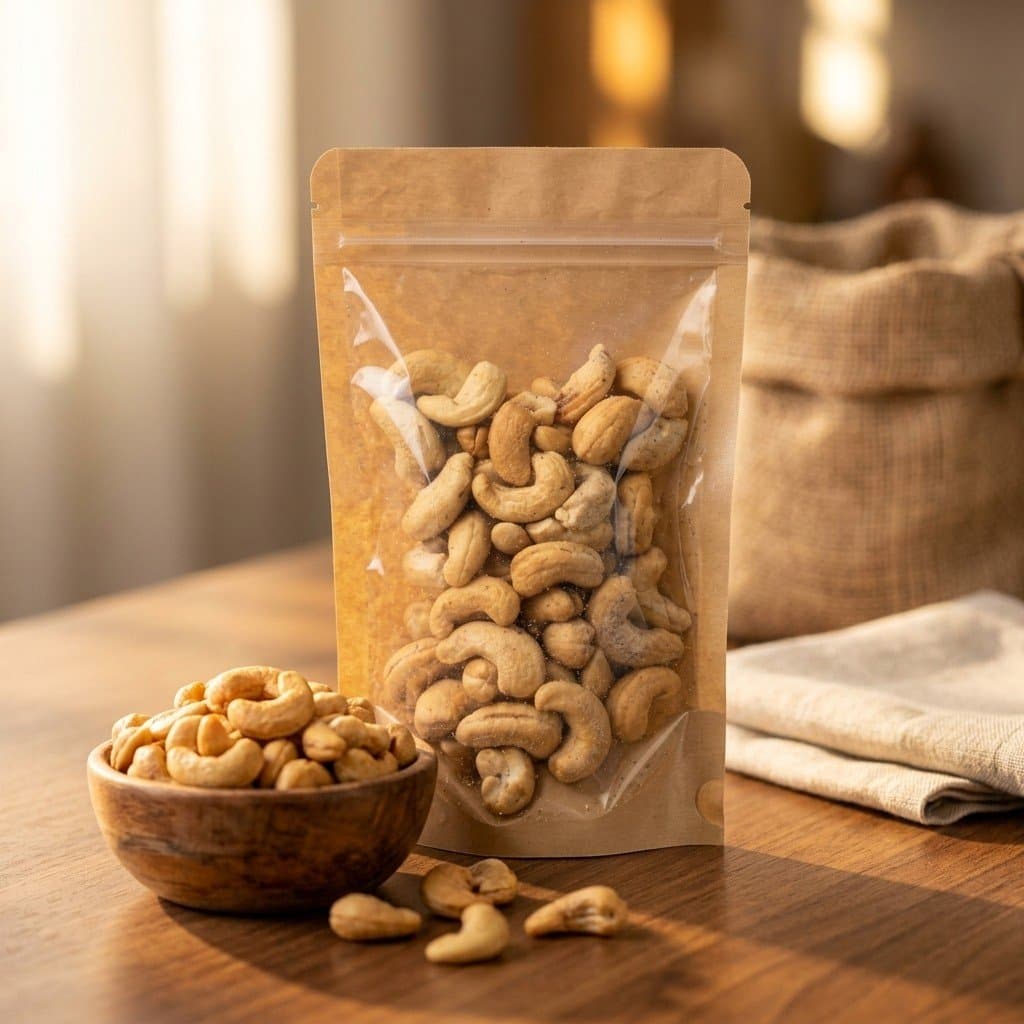
Raw cashews taste mild, a little sweet and milky, and they're soft enough to bend slightly before they break. Roasted cashews taste richer and more buttery, and they snap cleanly. Flavoured cashews, like Deviled Cashew, start from a roasted nut, because a crisp surface holds a seasoning much better than a soft one.
Is one healthier?
The difference in nutrition between raw and roasted cashews is small. Roasting removes some water, so a roasted cashew is slightly lighter, and it can change a few heat-sensitive nutrients a little. The bigger difference is usually what's added: oil for frying, or salt and seasoning. A plain dry-roasted cashew and a plain unroasted one are close to each other. For the numbers, see our cashew nutrition facts.
Which to use for what
For snacking, trail mixes, garnishes on rice and salads, and gifting, choose roasted. They stay crisp and taste like something you'd want to eat on their own.
For cooking, choose plain. Soft cashews blend into a smooth paste for curry gravies, homemade cashew milk and cream, and they simmer in coconut milk without going hard. Our Cooking Cashew is plain cashews for exactly this. Try them in the kaju curry in our cashew recipes, or see more ways to use cashews.
For cashew butter, either works. Roasted cashews give a deeper, nuttier butter, and plain ones give a milder, sweeter one.
How to tell them apart in the shop
Unroasted cashews are pale ivory, matte and slightly soft. Roasted ones are golden to deep brown, a little shiny if they've been fried, and dry and crisp to the touch. If a pack just says 'cashews' and you can't see them, check the description, because the label should tell you whether they're roasted, fried or seasoned.
Storing both
Both kinds go stale when they're exposed to air, heat and light, so keep them sealed in an airtight container somewhere cool and dark. Plain cashews take on moisture and smells more easily, and roasted ones lose their crunch. Our guide to storing roasted cashews has the details.
So which should you buy?
If you only buy one, make it roasted for eating and plain for cooking. If you cook with cashews often, keep a pack of each. You can shop our cashews online and compare per-kilo prices on our price guide.
Keep reading
If you enjoyed this, you might also like our guides to how a cashew is grown and processed and what burnt cashews are.