October 14, 2026
Cashew Quality Classes: What 'White', 'Scorched' and 'Dessert' Mean
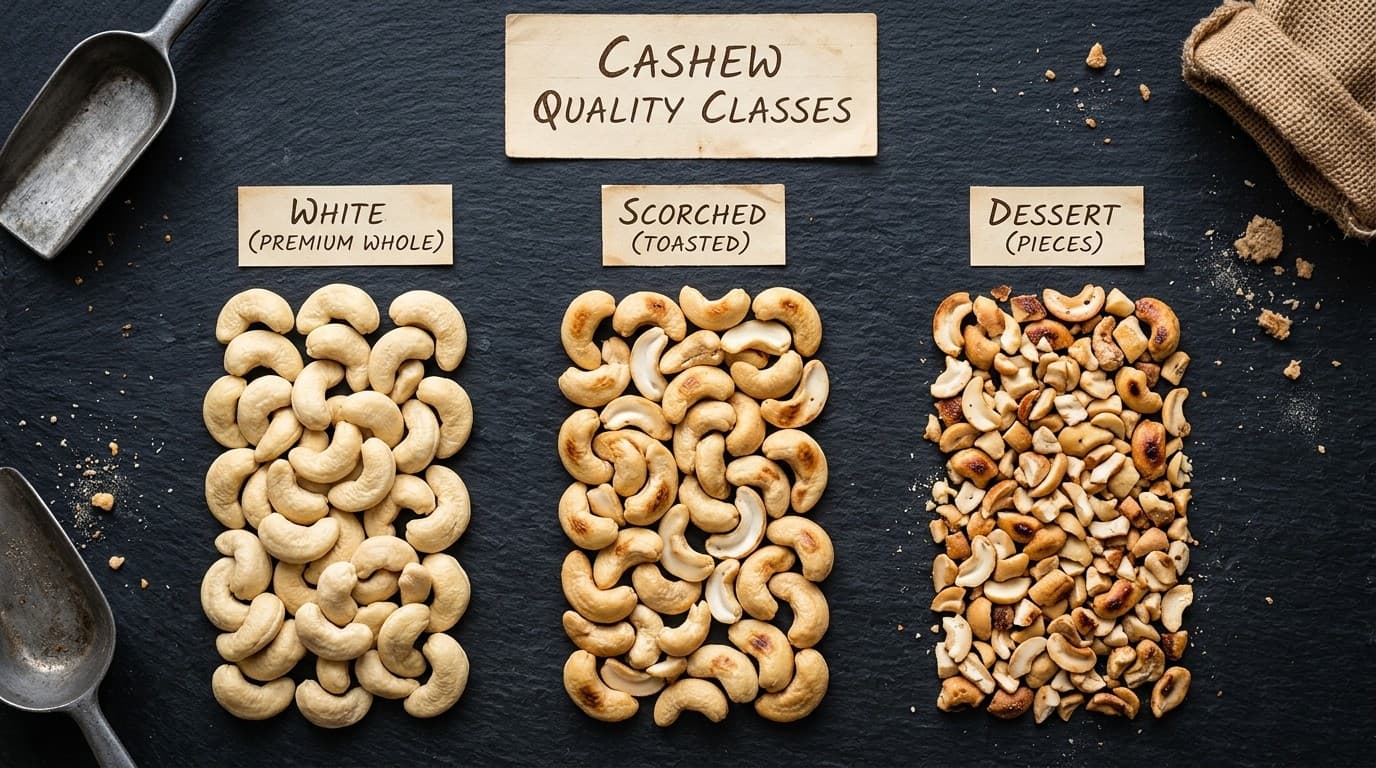
Size and colour are separate
Cashews are graded in two ways. One is size, which we explained in how many cashews are in a kilo. The other is colour and appearance, which decides the quality class of the kernel.
The three classes
The international standard used for cashew kernels, UNECE DDP-17, groups them into three classes. The Global Cashew Council describes them like this. Extra class kernels are the best: ivory, pale ash-grey or light yellow, and called 'white' in the trade. Class I kernels are lightly blemished, in shades of light brown, deep ivory or yellow, and are traded as 'scorched'. Class II kernels are darker or more discoloured, amber, deep brown or spotted, and are known as 'scorched seconds' or 'dessert'.
Why the kernels differ in colour
Colour comes from the whole process: how the nut was dried and heated, how the skin was removed and how the kernel was handled. A darker colour doesn't mean the cashew is unsafe or stale. It simply means the kernel doesn't meet the strictest appearance standard, so it's sold at a different price and often used where looks don't matter.
'Scorched' is a trade word
'Scorched' in this grading system is a label for kernels that came out of processing with a slightly darker or blemished colour. It isn't the same as our Burnt Cashew Nut, which is a deliberate dark roast made from peeled cashews for its smoky flavour. We explain the difference in what are burnt cashews?
Where lower classes go
Kernels that are paler and perfect go into premium snack packs and gifts. Those that are darker or have marks are often used in cooking, in confectionery and bakery, or ground into pastes where appearance doesn't matter. The taste is much the same.
Does class change the taste or nutrition?
Not in any big way. The classes describe appearance, not safety, and a darker or spotted kernel tastes much the same as a pale one, with a similar mix of fat, protein and minerals. What changes is the look, the price and where the cashew is used. That is why lower classes often go into cooking, sweets and pastes, where nobody sees them.
How classes show up in the price
Premium white kernels cost more because fewer of them come out of processing with that flawless colour, and they sell as snacks and gifts. If you see a very low price per kilo, it can mean a lower class, smaller kernels, pieces or an older stock, so it is worth checking what the label says before you compare prices. Our cashew price guide and the post on what cashew pieces are used for help you compare like with like.
Roasting changes the colour again
Once cashews are roasted, they all turn golden or brown, which can hide small differences in the starting colour. A good roast is even, with no pale patches and no dark, burnt spots, and the same applies whichever class the kernel came from. Roasting to order, in small batches, makes it easier to get that evenness, as we describe in how Sri Lankan cashews are roasted.
What to look for as a buyer
When you buy cashews, a uniform colour and a clean look are signs of careful processing. Roasted cashews will always look darker than raw ones, so judge by the colour of the roast and by how evenly it is done. Our guide to how to buy cashews online lists other checks.