October 16, 2026
What Happens to the Cashew Shell? The Surprising Uses of CNSL
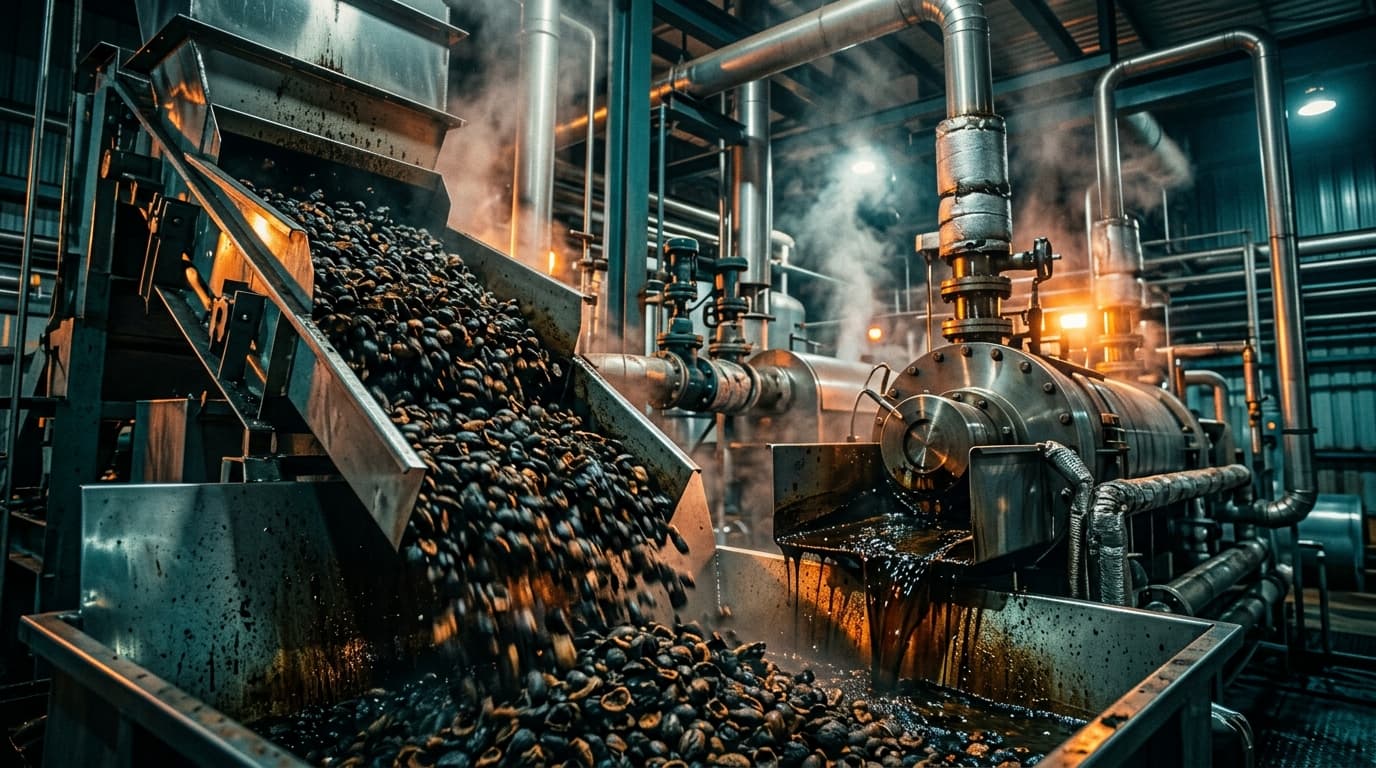
A shell full of oil
The curved shell around a cashew kernel isn't solid. Between its layers is a dark, thick liquid known as cashew nut shell liquid, or CNSL. It's the same irritating oil that can blister skin, as we mention in cashews are related to mangoes and pistachios. It's why nobody cracks a cashew open with their hands.
Handled with care
In processing, the shells are heated and opened carefully, and the workers protect their hands. Much of the oil is driven out during heating, and what's left must be kept away from the kernel so that it doesn't taint the flavour. See how Sri Lankan cashews are roasted.
A useful by-product
CNSL is valuable in industry. The Global Cashew Council lists uses in lubricants, varnishes and cement, and in the development of pharmaceuticals and fungicides. It can also be used in friction linings and coatings, and the empty shells themselves are used as fuel in some processing plants, which helps power the next batch.
Not wasting the tree
Cashew is one of those crops where little is wasted. The kernel is the food. The apple can become juice, jam and preserves, as we describe in what is a cashew apple? The shell yields an industrial oil and fuel. Even the tree is useful, because it grows on poor land and protects soil.
Why cashews are never sold in the shell
Because of that oil, you will not find cashews in their shells in shops, unlike almonds or peanuts. The shells are opened at the factory under controlled conditions, and the kernels reach you already shelled. Please never try to crack or roast cashews in their shells at home, since the oil can burn and blister skin, and the smoke can irritate the eyes and lungs.
What 'raw' cashews really are
The cashews sold as 'raw' in shops are normally not truly raw. They have been shelled using heat or steam, which is what frees the kernel and removes the oil, and then dried and peeled. Raw in this sense simply means they have not been roasted for eating. If you would like to read more about how that compares with the roasted kind, see raw vs roasted cashews.
From waste to resource
Industries that use CNSL treat it as a valuable material rather than waste, and using the shells as fuel reduces the energy a processing plant needs to buy. It is a good example of a crop where one part helps pay for another. Our post on the cashew harvest around the world shows how widely cashew is grown.
Why it matters to you
It's one more reason cashews take real effort to produce. Every kernel needs a shell to be opened with care, an oil to be kept away from the nut and a peeling and grading step. That adds up, and it's part of why whole cashews cost more than many snacks. Read how a cashew is grown and processed for the full journey, and see our roasted cashews for the result.