October 16, 2026
How Cashew Quality and Safety Are Checked
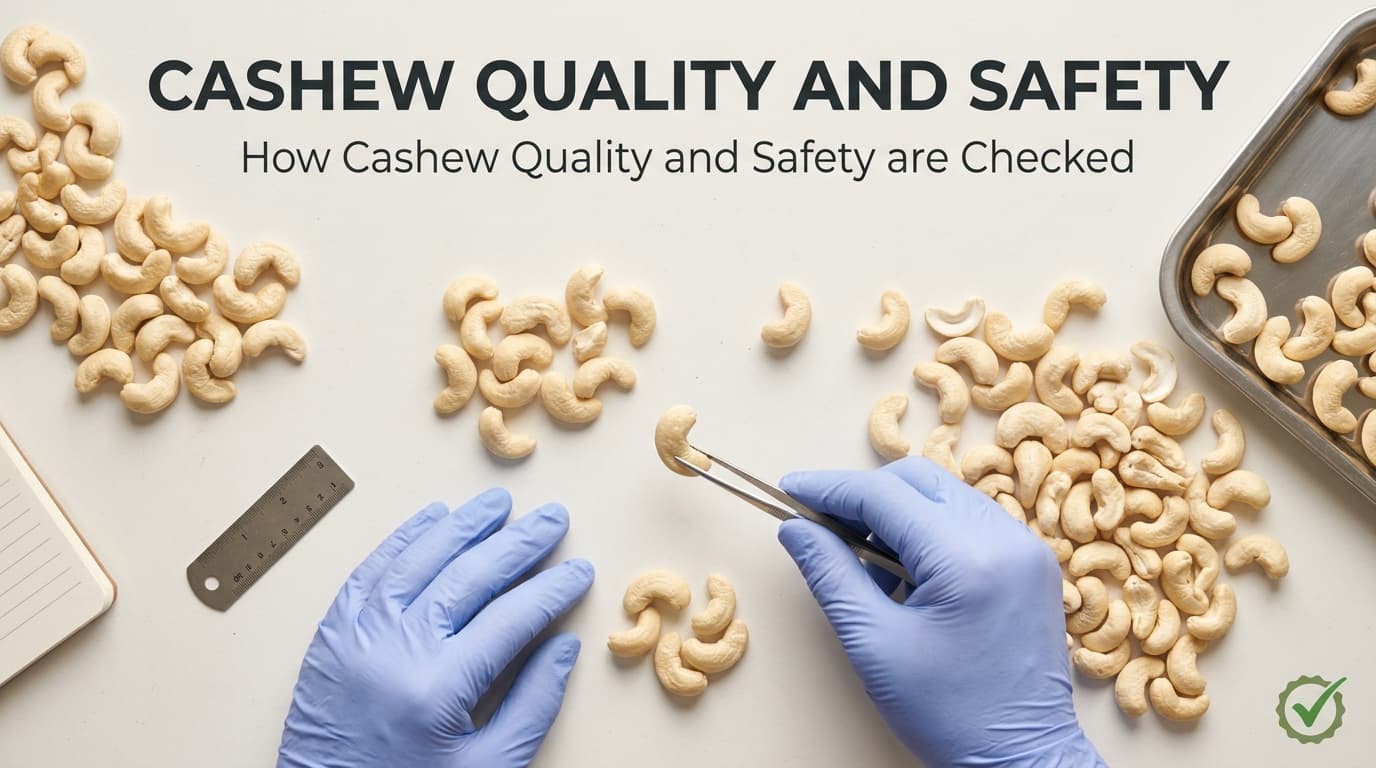
There's a standard behind the nut
Cashew kernels traded internationally follow a standard from the United Nations Economic Commission for Europe, called UNECE DDP-17 (the 2013 edition is the one the Global Cashew Council refers to). It covers how kernels are sized, graded and marked, and it works alongside food safety rules in each country.
What gets measured
According to the Council, finished kernels should have no more than 5 percent moisture and free fatty acids below 0.7 percent. Free fatty acids are a sign of the oil in the nut starting to break down, which is what makes nuts taste stale or rancid. Microbiological limits are set as well, for example a total plate count below 10,000 colony-forming units per gram.
Aflatoxin
Aflatoxins are toxins made by certain moulds, and they're a concern for many nuts and grains. Limits vary from country to country: the Council gives a range of about 2 to 20 parts per billion for aflatoxin B1, depending on the region. Keeping raw nuts and kernels dry, as we explain in why cashews are dried and stored carefully, is the main way to prevent it.
Clean, hygienic processing
The standard expects processing to happen in clean, hygienic conditions, with equipment and work surfaces regularly sanitised, and with quality checks at several stages: after shelling, after peeling and again at grading. Our overview of how a cashew is grown and processed lists the steps.
What this means when you buy
You can't test moisture or free fatty acids at home, but you can use your senses. Fresh cashews smell sweet and nutty, taste clean and are crisp when roasted. A cashew that smells like old paint or crayons, or tastes bitter or sour, is probably stale. Our storage guide shows how to keep them fresh.
Why freshness belongs on the checklist
A cashew can meet every moisture and safety limit at the factory and still taste stale by the time you eat it, because the fats in it slowly oxidise once the nut is roasted and exposed to air. That is why we roast in small batches to order rather than keeping shelf stock, and why sealed packaging matters. Our storage guide shows how to keep that freshness at home.
Questions worth asking a seller
Before you buy, it helps to know when the cashews were roasted and how they are stored, what is on the ingredient list, whether the pack is properly sealed, and how you can reach the seller if something is wrong. A reputable seller is happy to answer these questions. Be wary of unbranded bags with no information, or prices that look far lower than everyone else's, since a very low price can mean smaller pieces, an older stock or a lower grade.
Allergens and labelling
Cashews are a tree nut, and a good seller makes this clear on the pack and on the website. If you are buying for someone with a nut allergy, read our guide to tree nut allergy and cashews, and if you are unsure whether a product is suitable, ask the seller before you buy.
Buying with confidence
Choose a seller who tells you what's in the pack and how it's made, and that delivers fresh. See how to buy cashews online in Sri Lanka for a checklist.